Essence of Karate
iKD-SA
Karate: A Way of Life
THE SENSEI
A good teacher is one who has undergone many years of intense training under circumstances both difficult and uplifting, irrespective of personal experiences and setbacks, without boasting. A Sensei leads by example in all aspects of life, not only instructing in a dojo.
For this reason, respect and accept the knowledge and authority of the sensei.
The study of karate should become “karate-do”, indeed a way of life which path leads to the cultivation of virtues such as honesty, humility, concern for others, patience and strength.
With age and maturity these values support living a life of harmony and inner peace.
DOJO KUN – (Advises on guidelines to attain these values)
Seek perfection of character (Hitotsu: Jinkaku kansei ni tsutomuru koto)
Be faithful (Hitotsu: Makoto no michi o mamoru koto)
Endeavour (Hitotsu: Doryoku no seishin o yashinau koto)
Respect others (Hitotsu: Reigi o omonzuru koto)
Refrain from violent behaviour (Hitotsu: Kekki no yu o imashimuru koto)
Karate’s pre-history can be traced back to Daruma (aka Bodhidharma), founder of Zen Buddhism in Western India. Daruma is said to have introduced Buddhism into China somewhere around the year 500 AD, incorporating spiritual and physical teaching methods that were so demanding that many of his disciples would drop in exhaustion. In order to give them greater strength and endurance, he developed a more progressive training system. Daruma’s book, Ekkin-Kyo, can be considered the first book on martial arts, and his training and philosophy were adopted by the Shaolin Temple in northern China.
The modern history of karate begins in Okinawa. Okinawa-te (Okinawan hand), or simply te, was a simple but highly effective method evolving through centuries of use in real combat. The banning of weapons on the island for two long periods in its history contributed to the high degree of development of this method. But Okinawa-te was also influenced by the much more elaborate techniques and philosophical teachings of Shaolin kung fu and China’s southern Shokei style. These origins explain the dual nature of karate: extremely violent and efficient but at the same time a strictly disciplined philosophy with a nonviolent emphasis.
iKD-SA
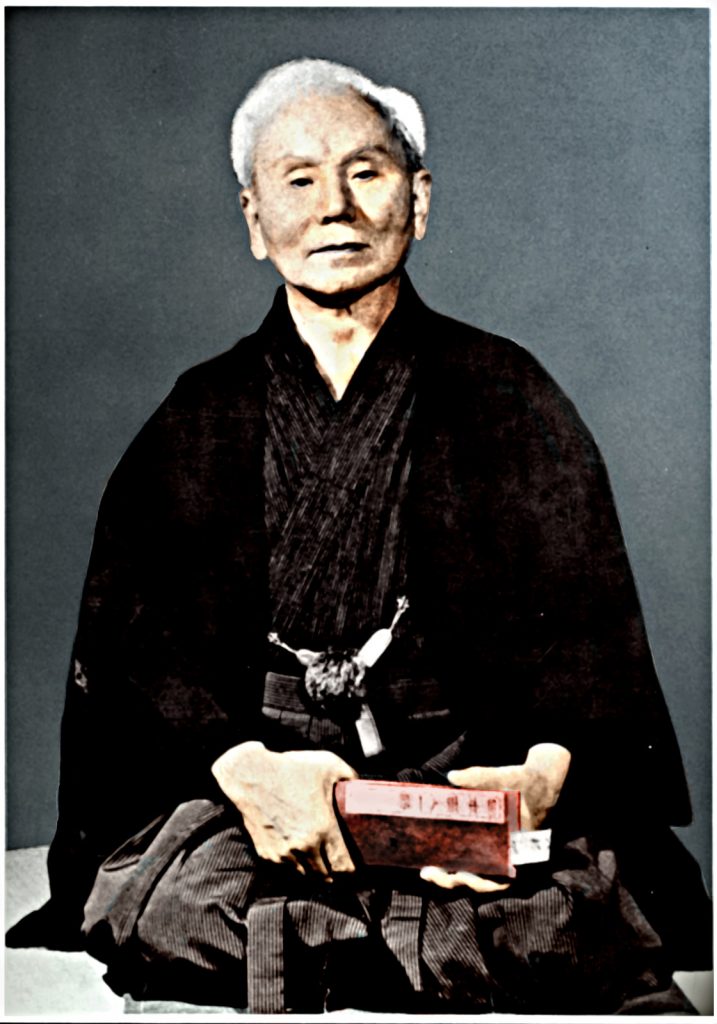
The Influence of Master Funakoshi
In 1916 Master Gichin Funakoshi became the first expert to introduce karate-do from Okinawa to mainland Japan. One of the few people to have been initiated into all the major Okinawan karate methods, Master Funakoshi taught a synthesis of the Okinawan styles as a total discipline. This method became known as Shotokan (literally “House of Shoto,” Funakoshi’s pen name as a poet). Because the style became very popular in Japan and proceeded to spread throughout the world, Funakoshi is widely considered to be the “father of modern karate-do.”